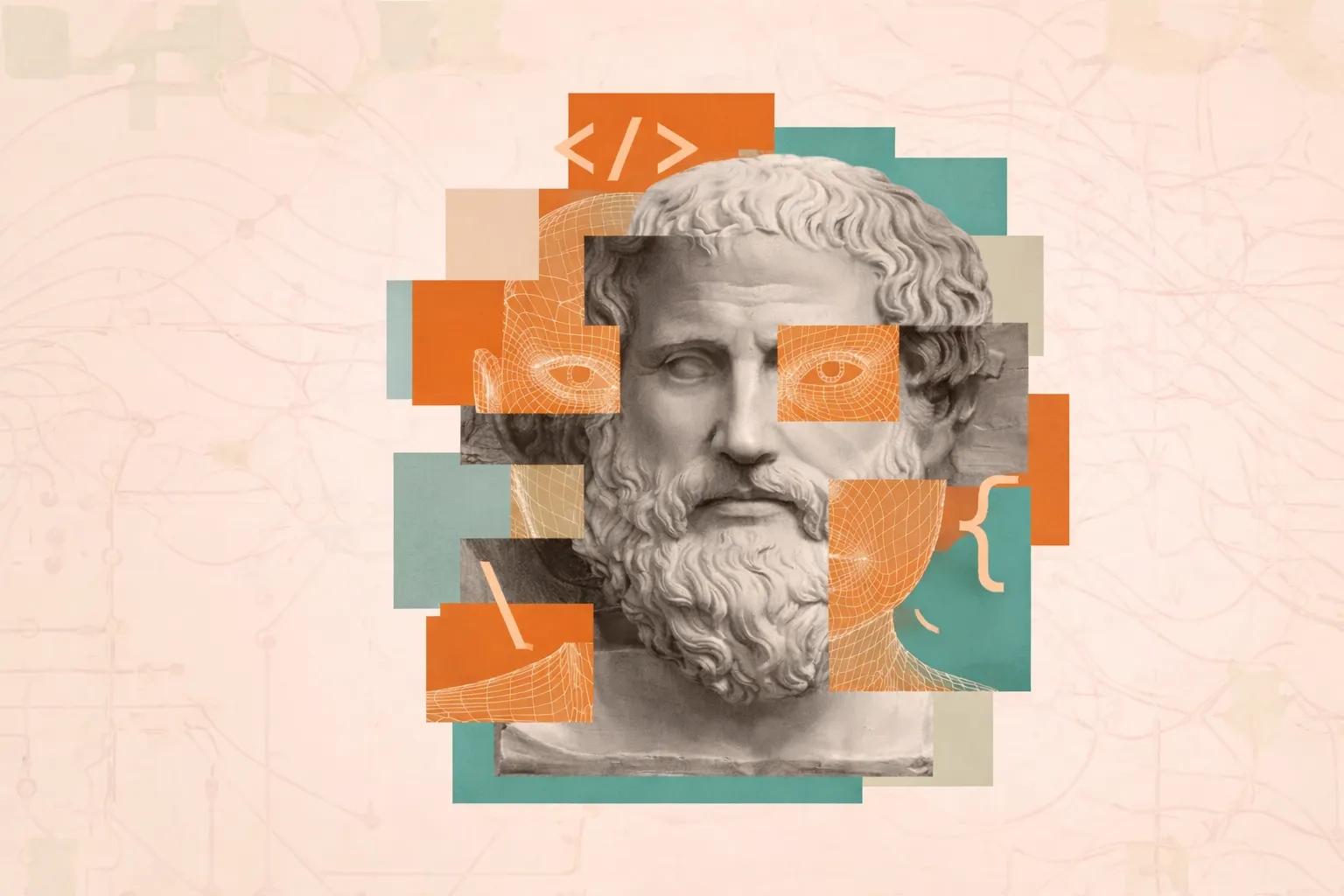
Having Aristotle in your pocket once meant access to deep knowledge, guidance, and thoughtful answers that required years of study to obtain. Today, that kind of access feels almost ordinary. AI tools respond instantly, offering explanations, correcting mistakes, and even holding conversations with learners practicing a new language. They guide users step by step, helping them improve vocabulary, grammar, and pronunciation with ease.
In many ways, learning a language has never been more supported. Yet even with this constant assistance, many learners still hesitate to speak with confidence in real situations. This raises an important question about what AI is truly building. Is it helping learners become confident communicators, or simply more accurate ones?
AI Is Changing How We Learn Languages
Artificial Intelligence did not just make language learning easier, it changed how people practice it. Instead of waiting for a class or a speaking partner, learners can now open a tool and start using the language immediately. They test sentences, adjust them, and try again. The process feels more like experimenting than studying. Christine Ro describes this in her BBC article, where she used AI to practice Spanish and received not only corrections but different regional variations, which made the interaction feel closer to real communication.
This shift also removed a lot of pressure from learning. There is no fear of making mistakes in front of others, and no fixed pace to follow. People can repeat, pause, or change direction whenever they want. That freedom, combined with improvements in natural language processing, is what made AI feel usable in everyday learning. It turned language practice into something constant and available, not something limited to a classroom.
The Emotional Side of Speaking a New Language
Speaking a new language is rarely just about knowing the words. It is that moment when you pause before speaking, wondering if what you are about to say even makes sense. Many learners understand more than they can say, not because they lack knowledge, but because they hesitate. Research shows that emotions like anxiety and confidence directly affect whether learners choose to speak or stay silent.
AI changes that experience, but it does not fully solve it. Practicing with a tool can feel easier. You can repeat the same sentence, make mistakes, and no one reacts. For some learners, that is enough to build confidence over time. But the feeling is different when it is a real person. The stakes are higher, and so is the fear. Some studies even show that while AI can make learners feel more comfortable, it can also create a different kind of unease when responses feel off or too mechanical. In the end, speaking a language is not just about getting it right. It is about feeling okay getting it wrong in front of someone else.
Gamified Language Learning: Motivation or Distraction?
Open any language app and you’ll see the same pattern. A streak to protect. Points to collect. A progress bar slowly filling up. It feels productive. You finish a lesson, get a reward, and move on.
And it works, at least at the beginning. Apps like Duolingo Max show how far this idea has gone. With AI features like role-play conversations, learners can practice everyday situations like ordering coffee or asking for directions. The conversations feel more natural than the old scripted dialogues, and the environment is low-pressure. You can make mistakes, get explanations instantly, and try again without feeling judged.
But even here, something shifts. The experience is designed to keep you engaged. You keep going to maintain your streak, to finish one more lesson, to stay consistent. The learning is happening, but it is shaped by the system. You choose safer answers, repeat familiar patterns, and focus on getting things right quickly.
So the question is not whether tools like this are useful. They clearly are. The question is what they are encouraging. Because practicing inside an app is one thing. Speaking freely, without prompts or rewards, is something else.
Conclusion
AI has made language learning easier, more accessible, and more consistent, helping learners practice more and improve accuracy. But speaking a language is not just about getting it right. It is about confidence and the willingness to use it in real situations. In the end, the real question is simple: are we learning to complete lessons, or to actually speak?
Reference
https://www.frontiersin.org/journals/psychology/articles/10.3389/fpsyg.2023.1131506/full
https://www.frontiersin.org/journals/psychology/articles/10.3389/fpsyg.2023.1131506/full
https://www.frontiersin.org/journals/education/articles/10.3389/feduc.2026.1754080/full
https://medium.com/elixir-ai-language-learning/ai-language-learning-does-it-work-300bf6c884eb